Estimating Your Essential Retirement Expenses

Key Takeaways
- Essential expenses are the non-negotiable costs your retirement income plan should cover first.
- Subtracting your reliable income from expected expenses can help reveal your retirement income gap.
- Covering essential expenses with guaranteed income can make the rest of your portfolio easier to manage.
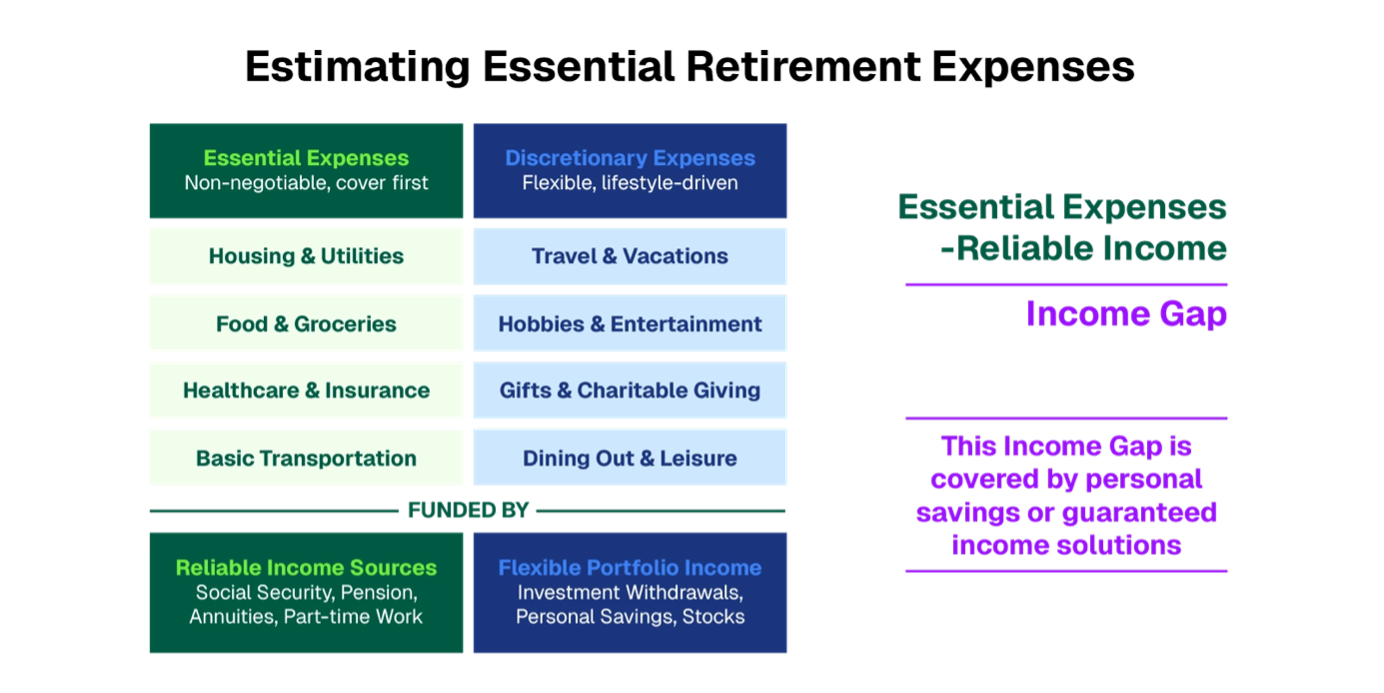
A solid retirement income plan starts with understanding your essential expenses—the costs necessary to maintain your lifestyle, such as housing, utilities, food, insurance, healthcare, and basic transportation. Unlike discretionary expenses, such as travel, hobbies, and gifts, essential expenses are the costs you can’t cut back on, even when markets decline. That’s why many retirees focus first on securing dependable income to cover these core needs.
A simple approach is to list your expected retirement expenses, then subtract the income you expect from reliable sources like Social Security or a pension. The remaining amount is your “income gap.”—the portion of income that may need to come from personal savings or guaranteed income solutions.
Covering essential expenses with reliable income frees up the rest of your portfolio to be invested more flexibly. Many retirees find this structure easier to manage and less stressful than relying on investments alone to produce the income they need.
Covering essential expenses with reliable income allows the rest of your portfolio to be invested more flexibly. Many retirees find this structure easier to manage and less stressful than drawing all income from investment withdrawals.
Disclosures:
This material is provided for educational purposes only and does not constitute investment, legal, tax, or insurance advice. It should not be relied upon as a recommendation to purchase, sell, or exchange any security or insurance product. Investors should consult their financial, tax, and legal professionals before making financial decisions.
Annuities are insurance products issued by insurance companies. Guarantees are subject to the claims paying ability and financial strength of the issuing insurer. Product features, limitations, fees, surrender charges, and availability vary by contract and carrier.
.avif)