Funding an Annuity: Identifying the Right Sources

Key Takeaways
- Annuities can be funded from several sources, including retirement accounts, cash, and bond allocations.
- Many retirees use annuities to turn part of their savings into reliable and predictable income.
- Funding decisions should ideally align with tax considerations and overall retirement goals.
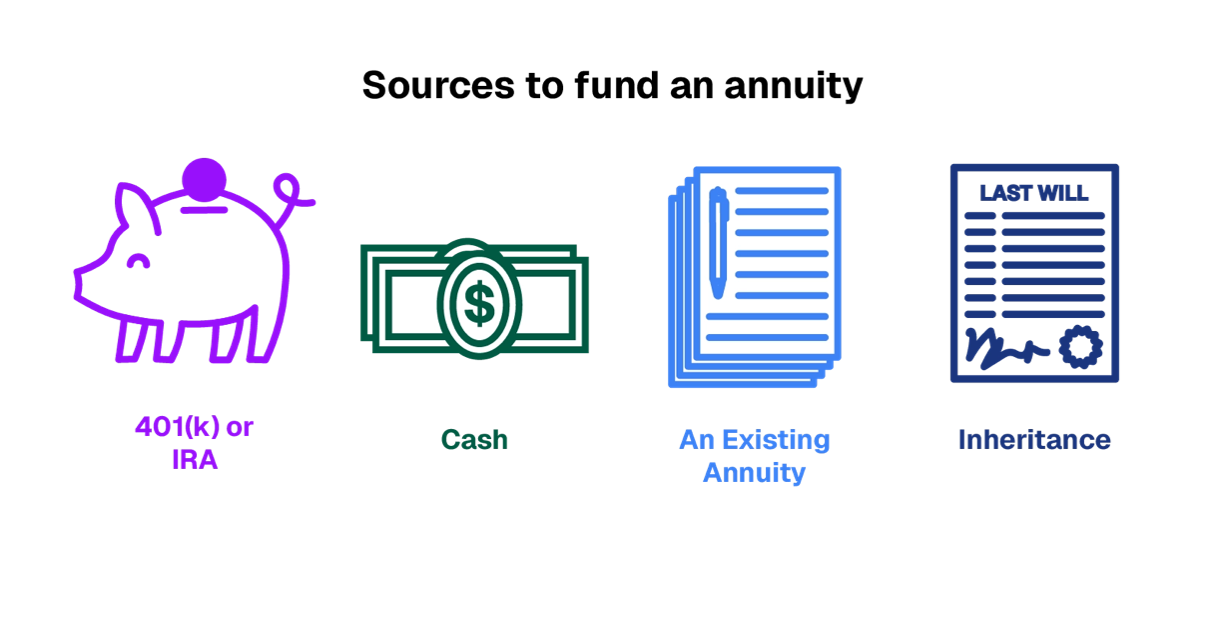
Annuities can be funded using various assets, including IRAs, 401(k)s, bond allocations, or cash. Retirement researcher Wade Pfau suggests using an annuity as an alternative to traditional fixed income, allocating a portion of a bond portfolio to an annuity to create a predictable stream of guaranteed lifetime income.
For people over age 59½, retirement accounts often offer flexibility to reposition assets without tax penalties, depending on individual circumstances. Rolling part of a 401(k) or IRA into an annuity can help convert accumulated retirement savings into a stream of predictable income—much like a paycheck—that can last for life.
How you fund an annuity should ideally align with your overall investment strategy, tax situation, and retirement goals.
Disclosures:
This material is provided for educational purposes only and does not constitute investment, legal, tax, or insurance advice. It should not be relied upon as a recommendation to purchase, sell, or exchange any security or insurance product. Investors should consult their financial, tax, and legal professionals before making financial decisions.
Annuities are insurance products issued by insurance companies. Guarantees are subject to the claims paying ability and financial strength of the issuing insurer. Product features, limitations, fees, surrender charges, and availability vary by contract and carrier.
.avif)