Why Market Volatility Threatens Retirement Savings

Key Takeaways
- Market volatility is unavoidable—the S&P 500 Index has experienced an average 14% intra-year drawdown every year since 1980, meaning the market dipped that much at some point during the year, even in years that ultimately finished positive.
- Large portfolio losses just before or soon after retirement can permanently impair your ability to generate income—a phenomenon known as sequence-of-returns risk.
- Understanding the relationship between market risk and retirement timing is the first step toward protecting your savings.
Investing in the market can be a powerful way to build wealth for retirement. Equities have historically outpaced inflation and delivered strong long-term returns. But markets don’t move in a straight line. Crashes, corrections, and bear markets are part of the cycle—and the timing of those downturns matters enormously.
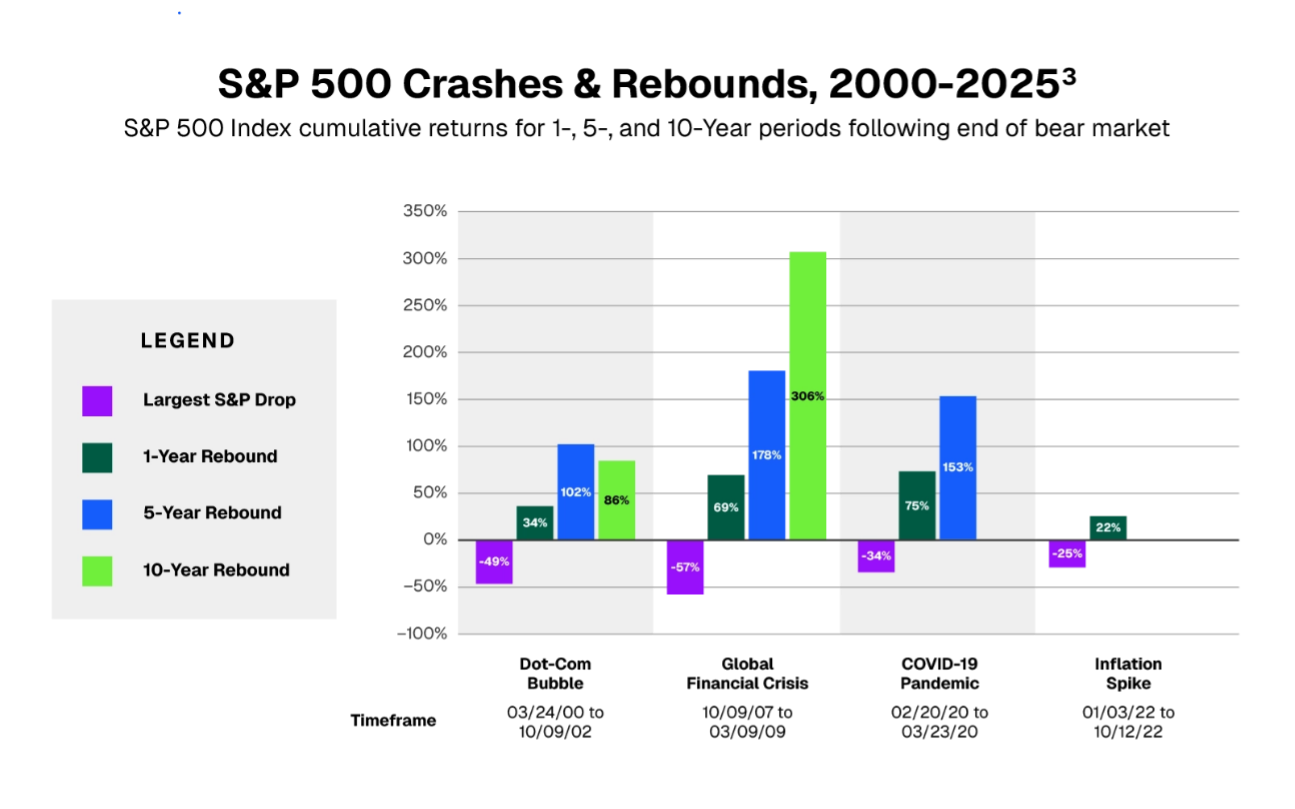
The S&P 500 index has a long history of delivering positive annual returns even though it has experienced an average 14% intra-year drawdown every year since 1980. In other words, temporary drops are normal and expected within any given year—they don’t necessarily mean the year itself ends in negative territory. During your working years, a market decline is often something you can ride out. You continue contributing, your portfolio recovers, and you move forward.
But as retirement approaches, the stakes change. While you’re working, a market drop is just a loss on paper—you haven’t sold anything, so you still hold the same number of shares to benefit when the market recovers.
Once you begin withdrawing income from your portfolio, that changes. Now you may have to sell shares regularly to cover living expenses. If you’re forced to sell in a down market, you lock in that loss permanently—those shares are gone and can’t recover when markets rebound. Worse, you now need to sell even more share to generate the same income, leaving fewer left to grow. Over time, that dynamic—referred to as sequence of returns risk—can deplete a portfolio far faster than most people realize, even if the market’s long-term average looks healthy.
Disclosures:
This material is provided for educational purposes only and does not constitute investment, legal, tax, or insurance advice. It should not be relied upon as a recommendation to purchase, sell, or exchange any security or insurance product. Investors should consult their financial, tax, and legal professionals before making financial decisions.
Annuities are insurance products issued by insurance companies. Guarantees are subject to the claims paying ability and financial strength of the issuing insurer. Product features, limitations, fees, surrender charges, and availability vary by contract and carrier.
.avif)